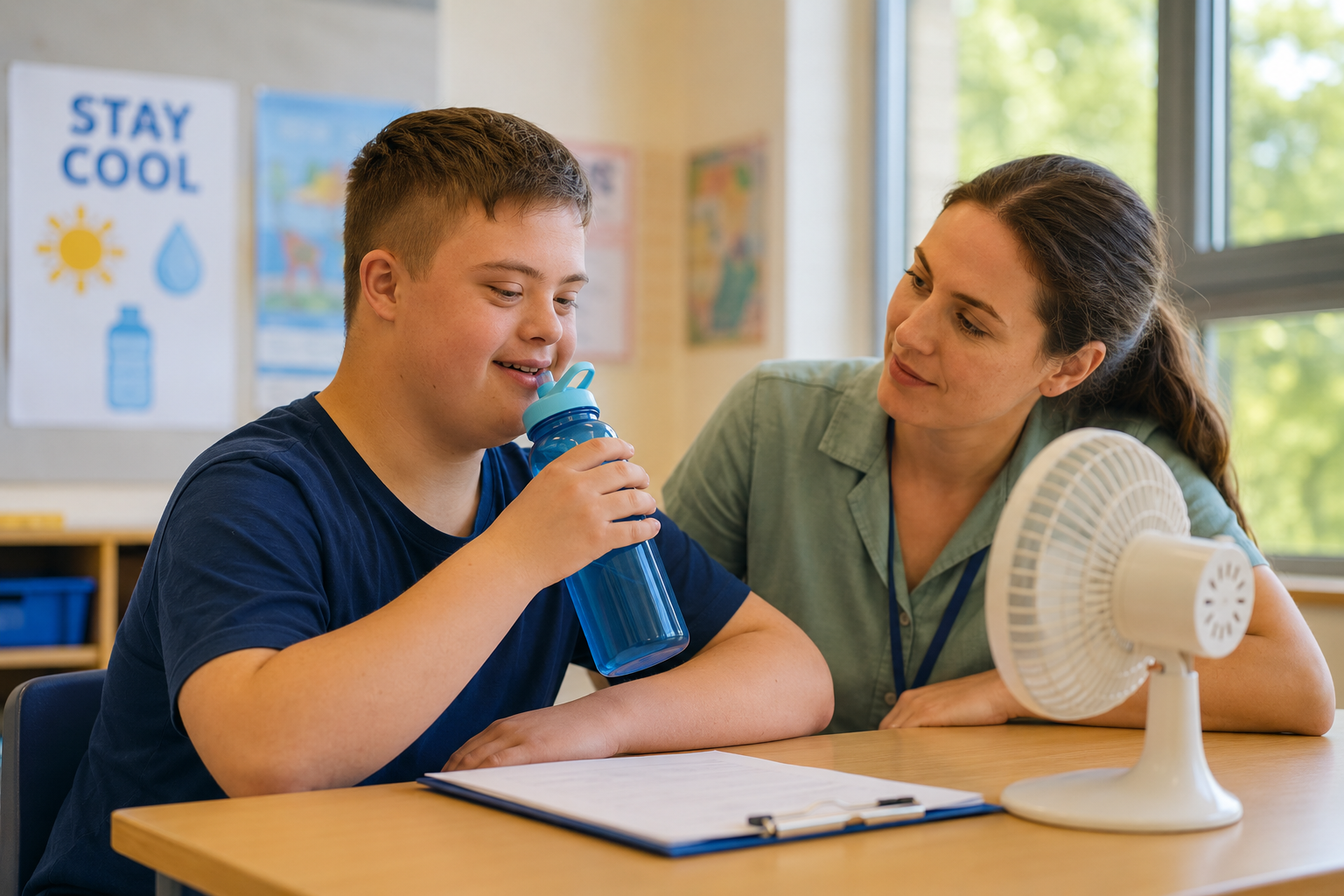
Supporting Young People with SEND in Hot Weather
As temperatures continue to rise across the UK, schools, colleges, training providers and workplaces are facing new challenges. For many young people with Special Educational Needs and Disabilities (SEND), hot weather is more than just uncomfortable—it can have a significant impact on wellbeing, learning, communication and participation.
While most people may simply feel a little tired or irritable during a heatwave, young people with SEND can experience additional barriers that make coping with high temperatures particularly difficult.
Why Heat Affects Some Young People with SEND Differently
Many young people with SEND have sensory, communication, physical or medical needs that can make managing heat more challenging.
Some may:
- Experience sensory sensitivities that make heat, sweat, certain clothing fabrics or sun cream uncomfortable or distressing.
- Have difficulty recognising or communicating that they are too hot, thirsty or unwell.
- Take medication that affects body temperature regulation or increases the risk of dehydration.
- Have mobility difficulties that make moving to cooler environments more challenging.
- Experience increased anxiety, emotional dysregulation or fatigue when routines are disrupted by hot weather arrangements.
- Find concentration, memory and processing information more difficult when temperatures rise.
- Understanding these challenges is essential if we are to ensure young people remain safe, included and able to achieve their potential.
Supporting Young People in Education
Schools and colleges play a vital role in helping young people manage the effects of heat.
Consider:
- Creating Cool Learning Spaces
- Encouraging Hydration
Where possible:
- Open windows and doors safely to improve ventilation.
- Use blinds or curtains to reduce direct sunlight.
- Relocate activities to cooler areas of the building.
- Provide access to shaded outdoor spaces.
- Some young people may need reminders or visual prompts to drink regularly.
Helpful strategies include:
- Timetabled drink breaks.
- Visual hydration reminders.
- Allowing water bottles on desks throughout lessons.
- Supporting young people who require assistance accessing drinks.
- Being Flexible with Uniform Expectations
- Strict uniform requirements can increase discomfort and distress during hot weather.
Temporary adjustments may include:
- Temporary adjustments may include:
- Removing blazers or ties.
- Allowing lighter fabrics.
- Offering alternatives for young people with sensory needs.
- Recognising and understanding Signs of Distress
Heat related difficulties can sometimes be mistaken for behaviour that can challenge. Look out for:
- Increased agitation or anxiety.
- Withdrawal or reduced communication.
- Headaches or dizziness.
- Difficulty concentrating.
- Unusual tiredness or lethargy.
Responding early can prevent situations from escalating.
Supporting Young People in the Workplace
For young people entering employment, supported internships, apprenticeships or work experience, managing heat is an important aspect of workplace wellbeing. Employers should consider reasonable adjustments. They can be simple adjustments that make a significant difference, such as:
- Flexible break times.
- Access to fans or cooler workspaces.
- Opportunities to refill water bottles.
- Temporary changes to working patterns during periods of extreme heat.
- Clear Communication: Some people may not feel confident raising concerns about their comfort or wellbeing.
Managers and mentors can:
- Check in regularly.
- Use clear and accessible language.
- Encourage young people to speak up if they feel unwell.
- Explain workplace procedures for managing hot weather.
Travel Considerations
For many young people with SEND, travelling independently can already be demanding. Hot weather may increase:
- Fatigue.
- Anxiety.
- Sensory overload on crowded public transport.
- Risk of dehydration.
Employers and education providers should be mindful of these additional pressures when planning attendance and working hours.
Preparing for Adulthood Includes Learning to Manage Wellbeing
One of the key Preparing for Adulthood outcomes is helping young people develop the knowledge and skills to manage their own health and wellbeing.
Heatwaves provide a valuable opportunity to build independence by supporting young people to:
- Recognise when they are becoming too hot.
- Understand the importance of hydration.
- Plan appropriate clothing choices.
- Manage travel during hot weather.
- Advocate for adjustments they may need in education, training or employment settings.
These are practical life skills that can support successful transitions into adulthood.
Families, education providers and employers all have a role to play in ensuring young people with SEND can remain safe, comfortable and engaged during periods of hot weather.
By understanding individual needs, making reasonable adjustments and promoting self-advocacy, we can help young people continue learning, working and thriving—whatever the weather.
At Future Ready SEND, we believe that preparing for adulthood means preparing young people for real-life situations and challenges. Supporting wellbeing during heatwaves is just one example of how personalised planning and practical support can make a lasting difference to outcomes.
This article has been informed by guidance from the UK Health Security Agency (UKHSA), the NHS and the Health and Safety Executive (HSE), alongside current evidence regarding the impact of high temperatures on wellbeing, learning and workplace participation.
References and Further Reading
- UK Health and Safety Executive (HSE) Temperature in the Workplace
Guidance on employers’ responsibilities for managing workplace temperatures, ventilation, hydration, rest breaks and reasonable adjustments during hot weather.
- UK Health and Safety Executive (HSE) Heat Stress
Information on recognising heat stress, reducing exposure, using cooling measures, and supporting workers during periods of high temperature.
- UK Health and Safety Executive (HSE) Thermal Comfort
Explains how heat can affect concentration, decision-making, behaviour and productivity, particularly where individuals cannot easily adapt their environment or clothing.
- UK Health Security Agency (UKHSA) Heat Health Advice
National guidance on hydration, staying cool, recognising heat-related illness and protecting vulnerable groups during periods of extreme heat. Recent UK heat-health alerts have highlighted the importance of supporting children and vulnerable individuals during hot weather.